Did our shift in maths pedagogy create equitable outcomes? What can we do to make it a more PES equitable experience?
Our students need tangible materials to help with their understanding of a problem (when needed). However, they also need to be TAUGHT how to use those materials. We, as a school, need a little more structure and sequence with our teaching paths that will incorporate the concepts and teaching styles of DMIC. We will be unpacking this as a staff this week.
While we still we be structuring culturally relevant problems, our groups will be extremely fluid. Socially, academically, and structurally allowing for ability stretching are great ways to structure learning groups for different opportunities.
This was such a valuable PD session as a staff as we reflected on what worked well and what was successful for our students during our two years of DMIC roll out and mentoring. Although we gained a tremendous insight into culturally relevant problem solving and how that could look with our students while providing formative data, we also had to step back and realise the gaps that we were now missing in the content knowledge that could be measured formatively.
I am excited to explore this more this year as I begin my 2020 Inquiry into teaching.
Welcome to my Professional Learning Blog! This year, I am teaching in a 1:1 Chromebook classroom with Year 3/4 students at Pt England School in Auckland, New Zealand.
Showing posts with label DMIC. Show all posts
Wednesday, 29 January 2020
Friday, 12 April 2019
PES DMIC PD
Today the teacher's of Pt England had a teacher's only day and we spent the morning hearing from DMIC Don. It was a great session refocusing our mindset on various elements of DMIC Instruction. Below are my notes from that session.
DMIC-Don
April 2019
All the things we already know about maths (including follow up tasks and content knowledge) does not change with DMIC. Strengths with behaviour management and key competencies does not change. All that changes is the delivery of the mathematical content.
Complex Instruction
- Promotes a different way of understanding of how people learn
- A different image of what it means to understand a mathematical idea
- Norms
- Accountability
- Grouping
- Standing back and observing from a distance
- Provides opportunity for students to show what they know
- Teacher is able to pull from student interactions for sharing back
Social and Academic Status
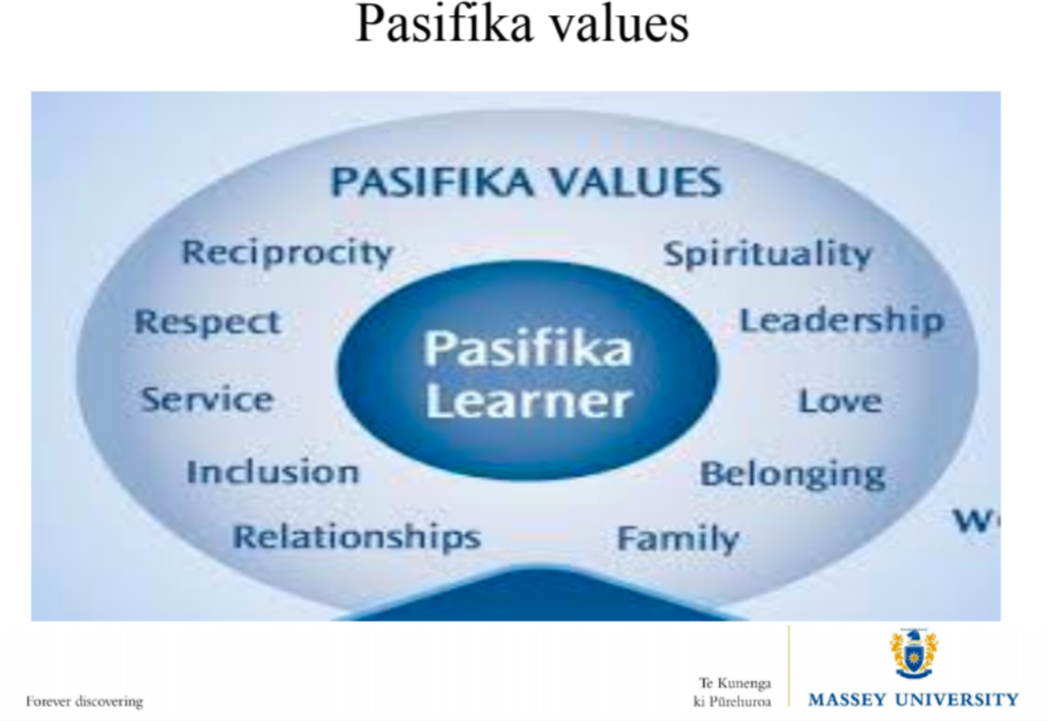
In GI, the community values, family, inclusion, reciprocal relationships, leadership (church, chief, school), family/culturally centered events, sports)
-confidence (DMIC; NO hands up….keep the control on the teacher not on the confident child who continually volunteers)
Assigned Value?
- English has more assigned value than other languages.
-non-fluent English speakers do not have the same competencies as those of native English speakers
-Asians are always good at maths
-Status at PES is often determined by those who are/are not able to self-regulate and use language to accurately express themselves.
Status GeneralisationHelps us understand how the characteristics between people differ and how they are pooled so that status is allotted
In GI, the community values, family, inclusion, reciprocal relationships, leadership (church, chief, school), family/culturally centered events, sports)
-confidence (DMIC; NO hands up….keep the control on the teacher not on the confident child who continually volunteers)
Assigned Value?
- English has more assigned value than other languages.
-non-fluent English speakers do not have the same competencies as those of native English speakers
-Asians are always good at maths
-Status at PES is often determined by those who are/are not able to self-regulate and use language to accurately express themselves.
Status GeneralisationHelps us understand how the characteristics between people differ and how they are pooled so that status is allotted
- Status is local and changes within settings
- Status differences in classrooms reflect those of wider society
- Many local status characteristics derive from the school and class culture
- Children watch and interpret teacher’s actions to see what is valued?
The effect of status
When students work in small groups the differences in status (not strengths or motivation) shapes who talks, who others listen to, and who’s ideas direct what decisions are made.
It is better to consider students as having low status instead of low kids, low achievers, struggling students because this means teachers will look for more effective ways to open up the maths for all students.
What does being “smart in maths” means?
-How can we build this into our classroom culture?
-Why do we listen? Focus on listening to understand
When students work in small groups the differences in status (not strengths or motivation) shapes who talks, who others listen to, and who’s ideas direct what decisions are made.
It is better to consider students as having low status instead of low kids, low achievers, struggling students because this means teachers will look for more effective ways to open up the maths for all students.
What does being “smart in maths” means?
-How can we build this into our classroom culture?
-Why do we listen? Focus on listening to understand
Presenting back: Roles need to be defined as things that need to be done. However, student involvement in presenting back needs to be fluid. Every student should be presenting at some point during the talk back.
Tuesday, 12 March 2019
PES: DMIC PD
PES PD: DMIC 11 March 2019
The hardest part of learning something new is not embracing new ideas, but letting go of old ones.
Justifying and Arguing Mathematically:
-Require that students indicate agreement or disagreement with part
of an explanation or a whole explanation.
-”Do we agree? Does anyone not agree?”
-Ask the students to provide mathematically reasons for agreeing or
disagreeing with an explanation. Vary when this is required so that
the students consider situations when the answer is either right or
wrong.
-”Why did you do that?”
-Ask the students to be prepared to justify sections of their solutions
in response to questions.
-”Can you explain why you (or your group) did that?”
-Everyone in the group presenting is held accountable for the solution.
-Require that the students analyse their explanations and prepare collaborative responses to
sections they are going to need to justify
-Model ways to justify an explanation
-”I know 3+4=7 because 3+3=6 and one more makes 7”
-Structure activity which strengthens student ability to respond to challenge
-Expect that group members will support each other when explaining and justifying to a larger group
-Explicitly use wait time before requiring students to respond to questions or challenges
-Require that the students prepare to explain their thinking in different ways to justify it
Questions to support student justification/extension?
-Why did you….
-How did you know…
-What do you mean by…
-Why did you do this...and not this…
**Encourage “so” “if” “then” “because” to make justifications**
Questions to extend an explanation into a generalisation? (CONNECT to GENERALISE)
-Does that work for every number?
-Would this work for “X”?
-Can you make connections between…?
-Can you see any patterns?
-How is this the same/different to what we did before?
Developing Generalisations
-Representing a mathematical relationship in more general terms
-Looking for rules and relationships
-Connecting, extending, reconciling
-Ask students to consider what steps they are doing over and over
again and begin to make predictions about what is changing and
what is staying the same.
-Ask the students to consider if the rule or solution they have used
will work for other numbers
-Consider if they can use the same process for a more general case
-”What happens if you multiply the number by 2?”
Revisiting how we Develop Proficient Mathematical Learners
-Attend to classroom culture
-Choose high-level, problematic tasks
-Launch tasks in contextual ways
-Anticipate strategies and monitor group work
-Select and sequence the sharing
-Allow student thinking to shape the direction of discussions
-Plan for anticipations and how the connect could look
Revisiting the Launch
-First focus on the context. The problem should be in front of each
group of students. Let Y3 up read it themselves.
-Use Talk Moves to help students with lower literacy levels to
access the information of the problem
-”What is happening in this story?” Ask for others to add on or
repeat and revoice until you know they all understand the
story.
-20% Teacher Talk 80% Student Talk
-”What do we need to find out?” Do not let them say an
operation, focus their attention on concepts not how to do it
-5 minutes work time (Jr School) 15 minutes (MAX!! Seniors)
-Think through grouping carefully, think social grouping or
what individuals can bring to the group work
-Never ‘High Half’/”Low Half’
-Regrouping Regularly
-Keep groups close together to work on the mat
-Teacher role: roving, monitoring, etc
Connecting and Summarising
-Plan explicitly!
-Draw connections between solutions
-End with a summary of key maths ideas so students leave with
a “residue” from the lesson. This provides a way of talking about
the understanding that remains
Monday, 6 August 2018
DMIC PD: Student Justification and Explaining
Today, our staff had Don and Mary come in to talk to use about our DMIC journey and what the future looks for us as a DMIC teacher.
The Journey so far...
- No longer thinking about Numeracy Stages but Curriculum Levels
- Letting go of items that were part of our old "tool kit"
- "O le tele o sulu e maua ai figota" Through collaboration the most difficult challenges can be overcome.
- Play with our groupings and think about how the children work well together and who they like working with
- Thinking of different ways to gain perspective of the class that will help to formulate groups we may not have considered otherwise
- When you are getting frustrated...stop, and have a reflection on how things have been going compared to the past 5 weeks, term or year?
Student Justification and Explaining
Using the Communication and Participating Framework:
Use this during our norms discussion...pick one for the class to focus on using. Once they have built up a bank of them, have students spend time in norm discussion going over them and what they look like just like we did with the norms.
- Require that students indicate agreement or disagreement with part of an explanation or a whole explanation
- Ask the students to provide mathematical reasons for agreeing or disagreeing with an explanation. Vary when this is required so that the students consider situations when the answer is either right or wrong.
- Ask the students to be prepared to justify sections of their solutions in response to questions
- Require that the students analyze their explanations and prepare collaborative responses.
- Structure activity which strengthens student ability to respond to challenge
- Expect that group members will support each other when explaining and justifying to a larger group
- Explicitly use wait time or think time before requiring students to respond to questions or challenge
- Require that the students prepare ways to re-explain in a different way an explanation justify it
What questions support generalising?
- Does it always work?
- How does this look compared to what we did last session?
- How does what ____ said compared to what ____ said?
- Where else could you use this?
- Does the rule stay the same when using (whole numbers, decimals, fractions)?
- Could you do this with _____?
- Can you see any patterns?
Monday, 18 June 2018
DMIC: Planning and Understanding for Big Ideas
Step 1: Begin with the mathematics
- -Planning takes time.
- -Consider what you students need in the way of Big Ideas (NZ Maths Key Ideas is another place to look for Big Ideas
- KNOW the Curriculum for your year level
- Google "big mathematical ideas"
- van de Walle book is highly recommended
- What do they bring mathematically and culturally
- Put current knowledge and interests at the centre of instructional decision making
- How can you best present mathematical concepts that match prior knowledge?
- Be clear about the big idea you want to connect to and explore
- It must be group worthy with appropriate challenge level
- Low floor, high ceiling
- Culturally responsive and relevant to your students
- Using bigger numbers allows for students to work at a higher (deeper) level of understanding
- Anticipate all approaches including misconceptions
- Recognise what they are thinking and how to move forward
- Identify what you're looking for and who is going to share and why
Friday, 13 April 2018
PES DMIC PD
Through argumentation you get the generalizations from students to make their justifications.
Deeping Mathematical Explanations.
Have students develop two or more ways to explain a solution which may include using materials (provided nearby the class...not given or suggested to the students to use)
Compare explanations and develop the norm of what makes that explanation acceptable. Reinforce what makes it mathematical.
15x3…..reinforce the story 15 what? 3 what?...remind students to label/record that to improve our explanation.
Have others ask questions….this is a from of mathematical reasoning
Reinforce the acceptability of multiple ways. Support them to make connections to other or previous problems.
Be sure to explicitly note student behaviour that supports mathematical practices.
Reminding kids to ask how to make sense of what they are doing for themselves and for sharing with others.
-Be mindful of student body language especially with those who are generally withdrawn from learning. They are often the ones playing with the materials but they are actually able to use them and explain their thinking.
-Choosing the “visual” solving group to report first often allows for deeper understanding when hearing from those who have a higher level response.
What is my next step for Term 2?
I want to be sure that my students are able to link back to and remember the context of the problem. It is about finding the solution to the story not solving a maths questions properly. I also want to focus on incorporating our norms into my classroom on a daily basis across subject areas.
THE 5 TALK MOVES
These are a teaching tool.. They are not for the students to use on each other. There are many different talk moves but this set is a useful summary. REPEATING: Always ask a student who has been listening and is confident to speak. This is used to provide understanding across the room for a point that has been made by one group.
Who can say that again?
Who can put that into their own words?
Who can restate what (name) said?
Can anyone repeat what they heard (name) say?
Tell us what your partner said.
Wait Time: ask the question and wait it out until that student is ready to report...used to provide “think time” to a student or group while reporting back to the class….Everyone (including teacher) is silent
Turn and Talk (Circulate and listen) This is very powerful especially during the share back time
Stop and Jot (circulate and observe)
Will you share that with the class?
Say more (who can say more; tell us more about what you are thinking; would you give an example?)
So you are saying….? (Revoicing)
Why do you think that?
What is your evidence?
How did you get that answer?
What convinced you that was the right answer?
Why did you think that strategy would work?
Can you prove that? What makes you think that?
ENGAGING: with the reasoning of others
What do you think about that?
Do you agree or disagree? Why? (BE EXPLICIT)
Who can add on?
What do other people think about that?
Does anyone have a different way of looking at this?
Does anyone have more evidence?
Instructional activities (Quick Images) can be used and adapted at many levels. Good for visual representations and equations (excellent for moving into multiplying).
Steps in a Lesson
Anticipate: what will I expect to see from my students?
Predict and record different ways students will solve a problem
First, have the group discuss. Present the pen once everyone has shared in the small group and are ready to begin working it out on paper.
Set Norms/Launch: Norms then Launch
Monitor: make note of who is doing what
Close listening and noticing
Questioning to make thinking visible and to allow students to refine or revise their thinking
Pressing students to consider all aspects of the task
Select: which 2 groups will share back
Sequence: what order will they present in?
Connect: Circulate back to the BIG idea
DMIC Term 1 Reflection
The PES Staff spent the last day of the term with some members of the team from DMiC. The first part of our morning was spent doing some personal reflection on how things are going so far.
Point to Remember:
Having children dig deep to work through the problem solving process is more valuable than actually solving the problem.
What has worked well? Why?
-Using mixed ability learning groups has provided such a different atmosphere of learning. Students are able to work together and learn from each other. It has been fun watching students question each other and have to ‘defend’ their thinking process to their peers.
How do our children feel and act about learning maths this way?
-Although it has been a learning curve for them, they really enjoy the freedom to explore their own problem solving process and not have to use a scripted method.
What have been your struggles? Why?
Bringing in those kids who just refuse to participate. Engaging the students who are quite happy to sit back (or roll on the ground) and let the others solve the problem for them.
Monday, 19 February 2018
DMIC: Session 2 with Bobby Hunter
DMIC-Session 2
Bobby began our session together by asking our staff to discuss the following questions:
- What are we doing so far that is good?
- What are we doing that is puzzling/problematic
After providing us with some time to talk in a small group, we shared with the staff our answers. The following is a rundown of her responses to our discussion.
In general guided lessons, who is doing the teaching? Who is doing the talking? THE TEACHER...we need to work towards the students taking control of the learning and the teacher facilitating THEIR discussion.
Begin by using problems that are not at grade level in order to get the kids used to talking. Once you start to see wins in your routines, and talking groups...then move things along.
Everyone in the group needs to be working in a way that allows for them each to be critiqued. Everyone needs to be struggling in their effort to learn something new.
We do less but students are learning at a deeper level with multiple levels of understanding.
We, as teachers, need to be working on the possibilities of what they should know instead of focusing on what they don’t know (and filling gaps).
When kids argue...Talk about how you are not disagreeing with a person but you are disagreeing with an IDEA. Also, make sure that the students understand that it is ok to have a disagreement if you are able to express why you disagree.
Setting Up Your Class for Group Work
Social and Strengths groups...these are not friend-based groups. They are groups of students that you know will work well together.
Class is split into halves-each half seen on alternative days. However, always have one group of 4 that you could see 2 days in a row to give them an opportunity to grow or teach others their different thinking.
Groups of 4 (2 for younger children)
One challenging task. If any student can solve it on their own it is not challenging enough)
Encourage recording and multiple representations
One Lesson
10 minutes Warm Up
5-10 minutes Launch/group norms..need to discuss everyday (values/beliefs...keep it family orientated)
15 minutes Small Group Activity
15 minutes Large Group Discussion
10 minutes Making connections to the big idea* (this is where the teacher explicitly teaches and connects to the big idea*)
Teacher Role: anticipate, monitor, select, sequence, connect
15 minutes Large Group Discussion
10 minutes Making connections to the big idea* (this is where the teacher explicitly teaches and connects to the big idea*)
Teacher Role: anticipate, monitor, select, sequence, connect
Remember to focus that we work together as a collective (a family). No one owns that end product...it belongs to the group/village.
*The Big Idea: this is something that encompasses the higher mathematical teaching...for example commutative property (a+b=b+a)
Quick Image problems: are ok to use instead of word problems as their task
Independent Work
Make it purposeful
Include elements of choice
Make the practice related to previous maths focus (problems from previous days, refer to previous problems)
All students should use this time to cement previous learning.
Friday, 26 January 2018
DMIC: Our Initial Discussion With Bobby Hunter
Developing Mathematical Inquiry in a Learning Community
Bobbie Hunter
The staff at Pt. England has begun having PD with Dr. Bobbie Hunter, Massey University. We are looking into creating a learning community for our children that involves teaching using a mathematical inquiry model. Here are my notes/thoughts from our first session as a staff.
What DOES work for diverse children will also work for ALL children. We need to be developing children who are doing the thinking...not just listening.
There is a misconception among many NZ primary teachers that Pasifika children come to school ‘not knowing anything’ when it comes to maths. However, the truth is that they know a lot of applied maths (setting the tables, laying out the mats, cutting sandwiches into fractions, etc).
It is important to provide current cultural context for our students. They may be Samoan but they are living here! What are the things they experience on a daily basis in their immediate environment.
NZ has the widest disparities between the cans and the cannots when it comes to kids and maths.
It is important to remember that Culture and Mathematics are Intertwined
Every culture uses maths in context to items that are specific to them. Students need to be encouraged to share intellectual problems that relate to them. When writing problems always ask, “Will my students be able to relate to this question?”
In order to bring the cultural aspect into a classroom you MUST look at their values.
Instead of saying “work as a team” rephrase to “work as a family”
Service concept - idea of individually helping others before helping yourself
DMIC-Developing Mathematical Inquiry Communities
- Connected, rich mathematical thinking and reasoning
- Proficient use of mathematical practices
- Inquiry learning within mathematics
- Social grouping and group worthy problematic activity
- High expectations and inclusion
- Culturally responsive teaching and learning
- Co-constructing teaching and learning
Talk Moves are important for promoting student interactions when discussing student explanations. (eg. why? how?)
If every teacher made their math problems a level or two high than where the students are achieving, our maths scores will increase dramatically.
-It is important to let the kids know that the problem is hard...it is ok to struggle and work on it over a few days.
Mathematical Practices
As a teacher, it is important to add on the “because” when reacting to student involvement (eg. “That was a really good question/explanation because…”)
- Making a claim/conjecture
- Taking time to hear and acknowledge the conjecture (jot it down) and come back to it at the important time
- Developing a mathematical explanation
- Justifying thinking
- Constructing arguments
- Generalising a mathematical idea
- Representing mathematical thinking using pictures, material, and numbers
- Using mathematical language
Launch (can take ½ a lesson on day one but will decrease the following days)
- Put the problem in front of the children...keep it in context, available and have the students read it.
- What is happening in the story? What is going on? (add-on, repeat, teacher revoice) Until the ALL understand the story.
- What is it asking us to do? DO NOT focus on operations. Focus on concepts, not how to solve it.
5 Minutes to work on the problem alone (if students seem to want the time). Then, move to working in a group to find a collective way to solve and explain their process on a large sheet of paper.
We are NOT thinking number knowledge and strategy we are focusing on the BIG idea. We use number knowledge in order to work within a strand, which should be our focus.
Teachers need to always use the problem context to make the explanation experientially real.
Groups should only have one piece of paper and one writing tool. They should be in groups of 4.
When students are given multiple opportunities to discuss, inquire, mathematically argue and sense make as they engage in mathematics.
Active listening and questioning for sentence making
- Discuss and role-play active listening
- Use inclusive language “show us’, “we want to know”, “tell us”
- Structure the students explaining and sense making section by section
- Emphasise need for individual responsibility for each other.
Encourage students to listen to (and look at) the student who is presenting.
Only work with about 12-16 students (in groups of 4) at a time and then rotate. This will allow for students who don’t quite get it to join in with the other group the next day.
Subscribe to:
Posts (Atom)